I. The Family Photo
From the small family photo of my grandparents in the middle of their five daughters and two sons (a photo so small I’m surprised they all fit) I had a memory that, like the photo itself, I had left in a corner that wasn’t bright enough to motivate me to write this story.
It all started the other day when I came across said photo and decided to enlarge it, perhaps out of an irrational fear that it would continue to dwindle until it disappeared altogether, as happens with many memories. I took it to the shop and they delivered the ancient image in a large envelope back to be in no time. On the way back a growing excitement was taking over me. I had just unintentionally summoned the past and I had a feeling that it would come knocking at my door. From the photo, I got the feeling of a collection of very Andalusian faces, fresh and oriental in the daughters, tanned in the boys, among which the figure of the head of the household stood out for its solemnity.
As I stood in front of the enlarged portrait, the same sensations arose, but something else revealed itself to me. Something more important that I had not noticed before, just like the image surfacing in the bath of the dark room; their gazes looked empty. Like their eyes were open but they weren’t seeing anything. Like their expressions were being hidden in the past.
And so, my mission to find out about them was born, who they were and how they lived, so that their astonished gazes would suddenly light up with meaning and they would hand over their deepest secrets to me.
In those white, lively and chatty villages, which smelled of warmth it wasn’t only olives were harvested but also many stories that filled the saddlebags of their collective memories. This is one of them. Though devoid of the grace with which my mother used to tell it, this is a simple story through which a whole past, as well as my mother’s voice, still resonates in me, lighting its candle in the far reaches of my memory.
II. Prelude and clarification: The Tarugos are coming!
The natives of Pozoblanco are not only referred to by the beautiful name of Pozoalbenses, but also by the nickname of “tarugo”. It’s not that they were born with timber under their arms or that their harsh living conditions made them hard to understand. The demonym comes from a time when timber, which represented an important business, was sold by lorries that burst noisily into the villages, creating great excitement, and causing the half-stunned people to exclaim from the windows of their houses, ‘The lumber is coming!’
III. Tell me about it, paloma
In the mountain ranges of Pozoblanco, or better said Los Pedroches, the winter, though short, is just as severe as the heat of the summer. The village originally grew around the houses and mansions of the wealthy class, spreading out towards the countryside in shacks and farmhouses. These farmhouses are where the other half of society was located, those whose lives were dedicated to working in the fields.
The countryside. It’s a winter afternoon. The January sky casts over the whitewashed houses its great purple mantle.
The village is the crossroads of the continuous passage of animals, of the breeze coming from the mountains and of the scents of burnt wood is, at this hour, a pot still that distils in the evening smelling of straw, of stables and stables, of burnt oak, thyme and resinous rockrose. It is the time when one moves in a hurry. Winter is hard on the hands of these olive growers and also on their legs.
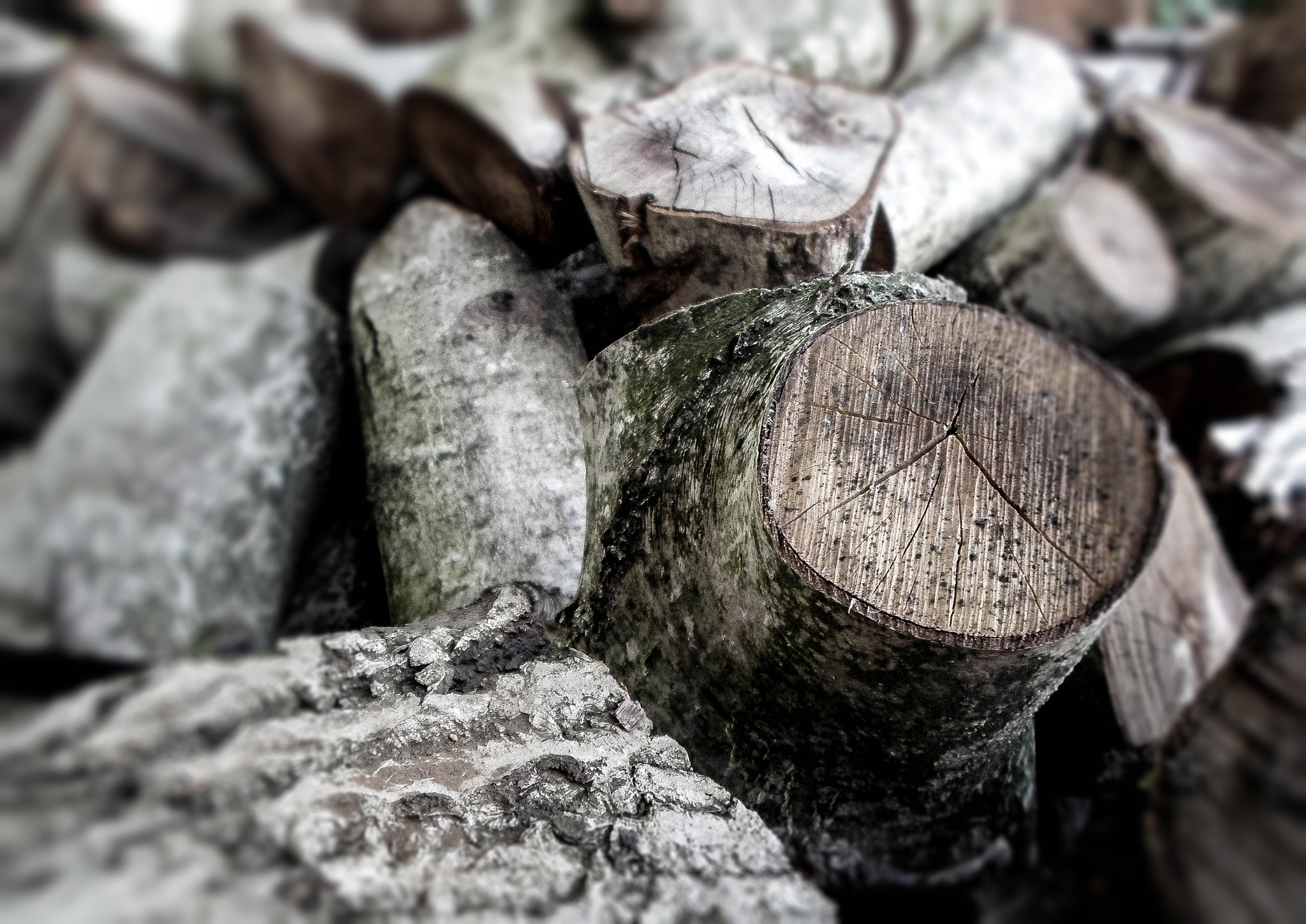
The man who is in a hurry here does not seem to be burdened by the large bundle of firewood he is carrying with him. He is tall as the trees and with a long, curly hair. He is the Andalusian from the mountains of Pozoblanco. He is my grandfather, Miguel Huertos, returning to the farmhouse with fine logs for his family. He is more than just my grandfather, he is a shared grandfather, because he is such a well-known figure: a keeper, a pruner of trees, the head of a large family, a man of the countryside and of his people, a ray of laughter and a cultivator of Andalusian grace. After his family, his greatest wealth is his wages, but even so he never comes home empty-handed, and he greeted by surprised and happy faces when the door is opened. This time it is not a rabbit from the field, nor some partridge eggs or quince jelly given by a neighbour, it is only the essential firewood.
As he climbs the last hill, he meets Fernando Castillo, who, from the top of his white mare, gives him this compliment:
‘What fine firewood you’ve got there, Huertos.’
And here, with night falling and our bandit’s face half covered by the load, it appears as if the bundle has started to talk. I don’t know who heard what grandfather said next, whether it was the elegant rider, the wind or the mare herself.
‘Tell me about it, paloma.’
And here I hear my mother’s voice too, finishing off the little story, bringing a knowing smile to my face.
‘If only Fernando Castillo had known that the firewood passing in front of his eyes was his.’
Today this memory has become my mother’s memory. Perhaps this is how one measures the passing of time.
That night candle joined candle in the farmhouse and all the eyes in the picture lit up, their cheeks glowed and then they gave me their gazes. I’m sure that under the moon that night, the chimney at the Huertos farmhouse had a good smoke.
This story was translated by Jack Caine and edited by Jasmin Griffiths.
Juan Moreno Huertos was born in Pozoblanco (Córdoba) and when he was only six months old he emigrated with his family to the south of France, to an area near the border known for housing many other Spanish families. There he studied at university. In a casual trip to Madrid he met his future wife. He ended up staying in the capital working as a secondary school French teacher. He still lives in Madrid and, although he’s always been writing, mainly poetry, in both Spanish and French, it’s just recently that he’s considered writing other forms and even starting his publishing journey. He’s working on a novel now, enjoying the beautiful passion that its literature.
Jack Caine is a twenty-something freelance translator from the Lake District, England who translates documents from Spanish, German and Italian into English on topics such as literature, other cultures, travelling and more.
Jasmin Griffiths is a Plymouth University graduate with a BA in English Literature and Creative Writing. She grew up in the south of Spain and after moving back to England decided to pursue her passion of writing. She has performed music and her poetry all over the country and also enjoys writing creative nonfiction and short stories.
This short story is part of a research project on speculative historical fiction in Ireland and Spain funded by the AHRC and the University of Plymouth.
Picture credits: Natalija Milodanovic

 THE WANDERING BARD